


Table of Contents
The short version of any Turkey packing checklist: modest layers you can add and remove, shoes that slip off easily for mosques, a European plug adapter, some cash, and mobile data that works the moment you land. Almost everything else can be bought in Istanbul, Izmir or Antalya for less than you would pay at home.
How we make money: Atlas eSIM sells the plans linked in this guide, and we earn money if you buy one. Alternatives are covered with the same criteria. How we research and compare
Build the Turkey packing list around three things the country will throw at you: big temperature swings between morning and evening, frequent shoe removal at mosques and homes, and a lot of walking on uneven stone. Everything below is ranked by how hard it is to replace locally and how often you will reach for it.
How this Turkey packing checklist was built
Most packing lists are an undifferentiated pile of forty items in no particular order, and the reader is left to work out which five actually matter. This one is ranked, so here is the model behind the ranking and its limits.
- Items are ranked by consequence, not by price. The question is not how good a thing is. It is how badly the trip goes if it is missing, multiplied by how hard it is to replace once you have landed.
- Replaceability is the deciding variable. Turkey manufactures textiles, has a pharmacy on every other corner and a market in every town, so clothing, toiletries and most gear are easily and cheaply replaced. What cannot be replaced is your own prescription, your entry paperwork and a phone that works before you reach a shop — which is why those three sit at the top and a jumper does not.
- We do not review gear and we take no payment for placement. There are no brand recommendations here, no affiliate links to a jacket, and no claim to have tested anything in a laboratory or on a mountain. Naming categories is a defensible claim; ranking brands we have not used would not be.
- The IMEI registration rule is weighted heavily, because it is the only item on this list that can leave a working phone permanently blocked in the country. Most packing guides do not mention it at all. It changes what you should do about mobile data, so it is covered in full rather than in a footnote.
- Connectivity claims come from our own activation records and from published regulator coverage, which is the one part of this list we can speak about with direct evidence, because it is the part we actually operate.
Last checked: September 2026. Entry rules, customs limits and baggage allowances change; verify anything on this page that has a legal consequence against an official source before you fly, because a packing list is not the authority on Turkey’s border rules.
The criteria behind this Turkey packing checklist
Every Turkey packing checklist item is scored on the same three questions, and they are listed in order of how strongly they answer them.
- How hard is it to replace in Turkey? Prescription medication and a working phone plan sit at the top. Sunscreen and a beach towel sit near the bottom, because every pharmacy and market stall sells them.
- How often will you use it? Something you touch daily beats something you might need once.
- How much friction does it remove? A plug adapter costs almost nothing and saves an evening of hunting for one at 10pm in Göreme.
Each Turkey travel essentials entry follows the same shape: why it ranks where it does, what specifically to pack, and when you can safely skip it. Weight and space are finite, and a bag you can carry up the stairs of an old Beyoğlu apartment beats a bag with a contingency for everything.
The ranked Turkey travel essentials, in order
1. Passport, entry documents and insurance, stored twice
Top of the Turkey packing list because nothing else matters if this goes wrong. Turkey’s entry requirements vary considerably by nationality, and they have changed more than once in recent years — British citizens, for example, no longer need a visa for short tourist stays, while other passports still require an e-Visa applied for in advance.
Pack: your passport with comfortable validity beyond your return date, printed and digital copies of your e-Visa if you need one, and your travel insurance policy number saved offline.
Skip if: never. Check the UK Foreign, Commonwealth and Development Office travel advice for Turkey or your own government’s equivalent within a week of flying, because the rules genuinely do move.
2. Mobile data arranged before you fly
Turkey travel data is second because it is the item most travellers leave until the airport, and the hardest to sort out sensibly once you have landed. Istanbul Airport is enormous, your ride-hailing app needs data, and the free airport Wi-Fi in Turkey typically requires an SMS verification you cannot receive without a working line.
Pack: Turkey travel data activated before departure. An eSIM (embedded SIM, a digital SIM built into your phone) installs over your home Wi-Fi and switches on when you land. If you prefer a physical Turkish SIM, buy it from an official Turkcell, Vodafone or Türk Telekom shop with your passport, not from a kiosk.
Skip if: your phone predates eSIM support — check which handsets can run an eSIM, as most flagship models from 2018 onward can — or your trip is a single-night layover inside the airport.
| Option | Ready on landing | Setup effort | Turkish IMEI registration applies | Best for |
|---|---|---|---|---|
| Home carrier roaming | Yes | None | No | Very short trips on a generous plan |
| Local Turkish SIM | No — shop visit, passport, queue | High | Yes | Stays over a month with a spare handset |
| Travel eSIM | Yes | Install before you fly | No | Most tourists and business trips |
| Hotel and café Wi-Fi | No | Low | No | Backup only |
Turkey travel data has one country-specific trap. Turkey registers the IMEI (International Mobile Equipment Identity) of foreign handsets used with a Turkish SIM card, and unregistered devices are blocked after a set period. A roaming travel eSIM is not a Turkish SIM, so it sidesteps the issue — but if you are staying long-term and buying a local line, read the current rules before you insert that SIM.
3. Broken-in walking shoes that come off easily
Third on the Turkey packing checklist because this is a country you experience on foot, and because you will remove your shoes several times a day. Sultanahmet’s cobbles, Ephesus’s marble streets and Cappadocia’s valley trails all punish new footwear.
Pack: one pair of cushioned, already-broken-in trainers or walking shoes with laces you can leave loose, plus sandals or slip-ons for the coast and hammam.
Skip if: you are on a resort-only trip in Antalya or Bodrum, where sandals and one pair of trainers cover everything.
4. A lightweight scarf and modest layers
Fourth because this is what to pack for Turkey’s mosques, which are free, spectacular and open to visitors outside prayer times. Women need to cover their hair inside a working mosque; everyone needs covered shoulders and knees.
Pack: the single most useful thing on this Turkey packing list — a large light scarf or pashmina that doubles as sun cover, an aeroplane blanket and a modesty layer. Add trousers or a long skirt, and one t-shirt that covers the shoulders.
Skip if: you genuinely have no plans to enter a mosque — though the Blue Mosque and Süleymaniye are usually reason enough to pack it.
5. A Type C/F plug adapter and a multi-port charger
Fifth on the Turkey packing list because it is tiny, cheap and completely blocking if forgotten. Turkey uses 220–240V with the round two-pin European plug.
Pack: one adapter per traveller and a single multi-port USB-C charger so you are not competing for the one socket behind the hotel bed.
Skip if: you are travelling from continental Europe and already use the same plug — you still want the multi-port charger.
6. A power bank in your hand luggage
Sixth because Turkey travel data and long days drain a battery. A dawn balloon flight in Cappadocia, a full day at Ephesus and an evening ferry across the Bosphorus will drain a phone that is also running maps, translation and a camera.
Pack: a 10,000mAh bank with a short cable, in your carry-on. Lithium batteries are not permitted in checked baggage.
Skip if: you carry a spare charging case, or your days are short and hotel-anchored.
7. Turkish lira in cash, plus a low-fee card
Seventh on the Turkey packing checklist because card acceptance in Istanbul is excellent and cash is still essential everywhere else. Market stalls, village restaurants, small museums, tips and the occasional taxi all prefer notes.
Pack: a debit or credit card with low foreign transaction fees, and plan to withdraw lira from a bank ATM after arrival rather than changing money at home. Keep a modest cash float split between your bag and your room.
Skip if: nothing — even resort travellers need tip money.
8. Sun protection stronger than you think you need
Eighth because what to pack for Turkey’s coast means real sun protection. The Aegean and Mediterranean sun in July and August is genuinely punishing, and Cappadocia’s altitude burns you while the air still feels cool.
Pack: more Turkey travel essentials sun cover than feels right — high-SPF (sun protection factor) sunscreen, a hat with a brim, and sunglasses. Sunscreen is widely sold in Turkey, so this is a convenience item rather than a critical one.
Skip if: you are travelling in December or January to Istanbul, where a hat matters more for wind than sun.
9. Layers for a 15-degree daily swing
Ninth because what to pack for Turkey inland is not what you pack for the coast. Turkey’s continental interior is not the coast. A Cappadocia morning in October can start near freezing and reach shirtsleeves by lunch.
Pack: what to pack for Turkey inland, a packable insulated jacket or fleece, plus a light waterproof shell for spring and autumn. Istanbul winters are grey, damp and windier than the temperature suggests.
Skip if: you are on a July coastal trip, where one light overshirt for air-conditioned interiors is enough.
10. Prescription medication in original packaging
Tenth on the Turkey packing list because Turkish pharmacies (eczane) are excellent and widespread, but your specific prescription may not be available or may need a local doctor’s note.
Pack: your full course plus a few spare days, in labelled original packaging, with a copy of the prescription. Add rehydration sachets and a basic stomach remedy.
Skip if: you take no regular medication — buy paracetamol locally rather than carrying it.
11. A reusable bottle you can refill
Eleventh, and a Turkey travel essentials entry that pays for itself: you will drink more water than you expect, and buying bottled water three times a day adds up in both cost and plastic.
Pack: a bottle with a filter if you want flexibility. Most residents drink filtered or bottled water rather than straight from the tap, and hotels, restaurants and airports have refill points.
Skip if: you are on an all-inclusive package where water is provided everywhere you go.
12. A crossbody bag that closes properly
Twelfth on the Turkey packing checklist because Istanbul’s crowded tram lines, the Grand Bazaar and Taksim are pickpocket territory in the same way Rome and Barcelona are — not dangerous, just opportunistic.
Pack: a Turkey travel essentials staple, a small zipped crossbody or a daypack you can wear on your front in crowds.
Skip if: you travel light enough to keep everything in front trouser pockets.
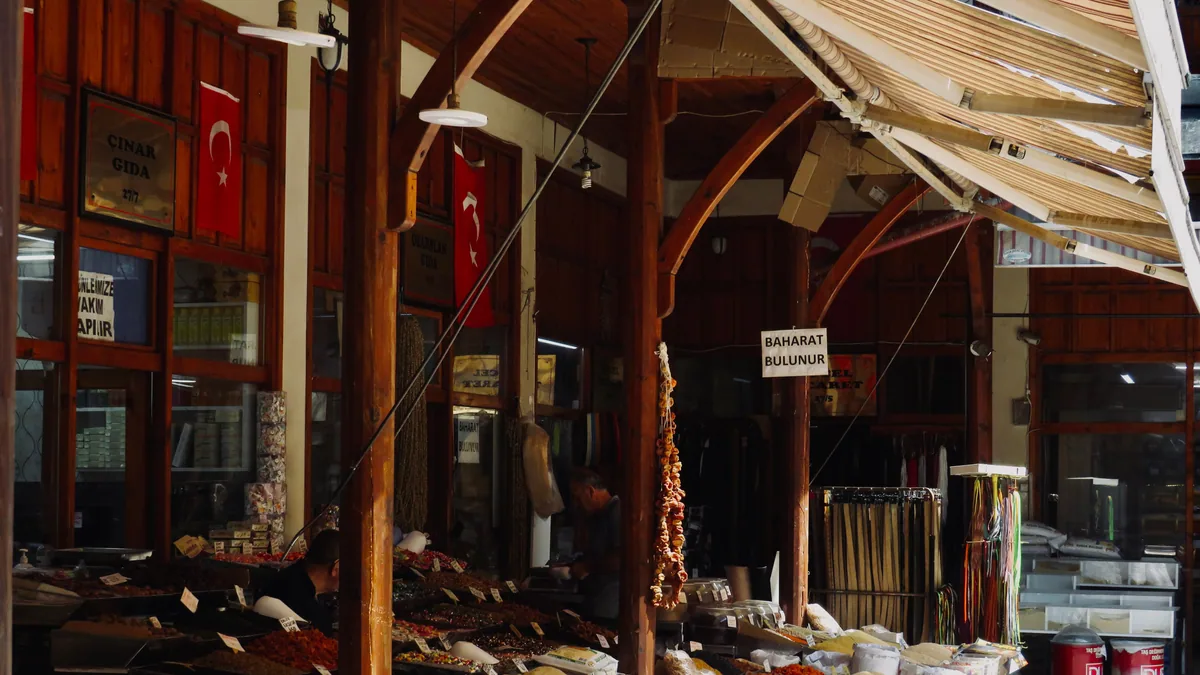
What actually goes wrong on a trip to Turkey
The ranked list handles the ordinary failures. These are the Turkish ones, and several of them are rules rather than objects.
The mosque is easier than people fear and stricter than they expect. Turkey is a secular republic and everyday dress in Istanbul, İzmir and the coastal resorts is broadly European, so nothing about daily life requires covering up. Entering a working mosque does: shoulders and knees covered for everyone, a head covering for women, and shoes off at the door. Most major mosques lend scarves, but carrying your own light one means you are never choosing between the visit and the queue. Shoes that come off without sitting down are worth more here than anywhere else in Europe.
The daily temperature swing inland is the real packing problem. Cappadocia, Ankara and the Anatolian plateau are continental rather than Mediterranean. An October morning in Göreme can start near freezing and reach the low twenties by afternoon, and a dawn balloon flight is genuinely cold. Packing for “Turkey in October” as though it were one climate produces a bag that is wrong twice a day.
Cash is a real category, not a relic. Card acceptance in Istanbul’s restaurants, hotels and shops is excellent. Market stalls, village cafés, dolmuş minibuses, small museums and rural fuel stations frequently are not. Lira also moves against foreign currencies faster than most, which is an argument for withdrawing modest amounts from bank ATMs as you go rather than changing a large sum at the airport at a poor rate.
Do not buy antiquities, and be careful what a seller calls old. Exporting genuine antiquities from Turkey is a criminal matter, and the definition is broader than tourists assume — it covers coins, fragments and religious items as well as obvious artefacts. Reputable carpet and ceramic dealers will provide export paperwork for anything that needs it. If a seller is vague about the age of something and reassuring about customs, that is the moment to walk away.
Tap water is treated but not what people drink. It is chlorinated and safe by the usual measures, and almost everyone — residents included — drinks filtered or bottled water anyway, partly for taste and partly because older plumbing in historic buildings is a genuine variable. A refillable bottle with a filter turns this into a non-issue and saves buying three bottles a day.
The e-Visa is a five-minute job people leave too late. Many nationalities need one, many do not, and the rules differ enough that guessing is a bad idea. Passport validity requirements also catch people out. Check your own government’s current advice rather than a travel article — including this one — because this is the only item here that can stop you boarding.
Summer on the coast is hotter than the numbers suggest. July and August on the Aegean and Mediterranean are genuinely punishing in the middle of the day, and Cappadocia’s altitude gives a fierce sun even when the air is cool. High-factor sun cream and a brimmed hat are not optional, and they are among the most commonly under-packed items for this destination.
What actually works. Pack modest layers you can add and remove, shoes that slip off, more sun protection than feels necessary, some cash, and sort the data and the paperwork before you leave.
What to leave off your Turkey packing list
- A hairdryer. Virtually every hotel has one, and the voltage difference makes it a poor traveller.
- A drone, unless you have researched and secured the relevant permissions. Rules are strict and enforcement at archaeological sites is real.
- Heavy guidebooks. Download the offline maps and the chapter instead.
- Formal outfits, unless your trip is a wedding or corporate. Turkish restaurants, even smart ones, rarely require a jacket — though if you are travelling for work, our notes on business trips to Turkey cover the exceptions.

The one item on this Turkey packing checklist with no physical form
A data plan ranks in the top five of this list and takes up no space in the bag, which is exactly why people leave it until the airport. It is worth more thought than that, because it is the only item here you cannot buy at the destination without already being at the destination.
Why arrival is the pinch point. Istanbul Airport is enormous and the transfer into the city is long, metered and best arranged on an app. Both Istanbul airports and the coastal ones have operator shops in arrivals, but they are the most expensive place in the country to buy, they queue after every wide-body arrival, and a Turkish SIM triggers the registration rule described above.
The networks you will actually be on. Turkcell, Vodafone Türkiye and Türk Telekom run the three networks. Turkcell has the widest reach into the eastern provinces, the Black Sea mountains and the inland valleys — including the parts of Cappadocia where you actually walk. On the coast and in the big cities the three are close enough that it does not decide anything.
The large marketplaces. Airalo and Nomad resell wholesale roaming capacity worldwide and are easy to buy from. The warning that costs real money here: Turkey is not in the EU roaming zone, and most European regional bundles exclude it. A plan bought for Greece or Bulgaria will very often stop at the Turkish border. Read the country list, not the region name. The consistent trade-off is limited visibility of which network carries you, which only matters once you leave the main routes.
The unlimited-data specialists. Holafly sells daily unlimited plans, which suit someone who genuinely cannot predict their usage. Read the fair-use terms before assuming unlimited means unlimited, and check whether tethering is allowed if a laptop or a second phone is coming with you.
The carrier-backed options. Ubigi runs on Transatel, owned by NTT Docomo, and Saily comes from the Nord Security group. Both tend to be clearer about the underlying network and both handle top-ups cleanly mid-trip.
The local route. Turkcell, Vodafone and Türk Telekom all sell tourist SIMs, and per gigabyte they are good value. The catch is the IMEI rule: a foreign handset used with a Turkish operator’s SIM must be registered, for a fee, within a limited window, or the handset itself is blocked on Turkish networks. That is a device-level block that survives you leaving the country and coming back. A roaming profile never touches the rule, because it connects under an agreement your provider already holds — which in Turkey is the single strongest practical argument for it.
We do not publish competitor prices. They move weekly, and a figure printed here would be wrong before most people read it. Check the live price yourself, and compare on the things that do not change every week: which network, whether tethering is permitted, and whether you can top up without reinstalling anything.
Competitor details last checked: September 2026.
Season-by-season Turkey packing checklist adjustments
Spring (April–May) and autumn (September–October): the best months, and the most layer-dependent. Add the waterproof shell and closed shoes.
Summer (June–August): adjust what to pack for Turkey to linen and cotton over synthetics, a second swimsuit so one is always dry, and a long-sleeved sun layer for boat days.
Winter (November–March): the Turkey packing checklist gains a proper coat for Istanbul, waterproof footwear, and gloves if Cappadocia is on the itinerary. Snow on the fairy chimneys is spectacular and cold.
Your Turkey packing checklist before departure
- Passport valid well beyond your return date; e-Visa applied for if required
- Copies of passport, insurance and bookings saved offline and emailed to yourself
- Bank informed of travel dates; card fees checked
- eSIM installed and tested before leaving home Wi-Fi
- Offline maps of Istanbul and your other destinations downloaded
- Type C/F adapter and multi-port charger packed
- Power bank in carry-on, not the hold
- Scarf and modest layer accessible in your day bag, not buried
- Medication in labelled original packaging with prescription copy
- Airline liquid and battery rules re-checked the night before
Turkey packing checklist: frequently asked questions
Do I need to cover my head everywhere in Turkey?
No. Turkey is a secular republic and everyday dress in Istanbul, Izmir and the coastal resorts is broadly European. A head covering is required for women inside working mosques, which is why a scarf earns a high place on any Turkey packing list.
Can I drink the tap water in Turkey?
Tap water is treated but most residents and travellers drink filtered or bottled water instead, partly because of ageing pipework in older buildings. A filter bottle handles this cheaply, and bottled water is inexpensive and available everywhere.
Will my phone work in Turkey?
Turkish networks run on standard 4G and 5G bands that virtually all modern handsets support. The question is which plan you use — home roaming, a local SIM, or a travel eSIM installed before departure. Our Turkey connectivity guide breaks down coverage by region, including Cappadocia and the southern coast.
How much cash should I carry?
Enough for a day or two of small purchases, topped up from bank ATMs as you go. Cards work in most Istanbul restaurants, shops and hotels, but bazaars, village cafés, small museums and tips are still cash-first.
Is a travel eSIM cheaper than roaming in Turkey?
Usually, and often by a wide margin, though it depends entirely on your home plan. Some European carriers include Turkey; many treat it as an expensive out-of-zone destination. Compare your own tariff against the cost breakdown of eSIMs versus roaming before deciding.
Does the IMEI rule apply if I use a travel plan?
No, and this is the most useful thing on this page. The registration requirement is triggered by putting a Turkish operator’s own SIM into a foreign handset. A roaming profile connects through an agreement your provider already holds with a Turkish network, so there is no registration, no fee and no clock running. For a stay under three months where you do not need a Turkish number, that removes the country’s one genuine trap.
How much Turkey travel data does a two-week trip use?
Three to eight gigabytes for one phone if your accommodation has Wi-Fi. Navigation in Istanbul, translation, ride-hailing and messaging make up most of it. Automatic photo backup over mobile data is the usual overspend — and Turkey is a destination people photograph heavily, so switching it to Wi-Fi-only genuinely matters here.
What should I pack for Cappadocia specifically?
Warm layers for the morning, whatever the forecast says about the afternoon. Balloon flights launch before dawn at altitude and are cold; the same day can be shirt-sleeve warm by lunchtime. Add proper shoes for the valley walks, which are dusty, uneven and longer than they look, and more sun protection than the temperature implies.
Before you go
Do three Turkey packing checklist things in the week before you fly. Re-read your government’s current entry advice, because Turkey’s visa rules for your nationality may have changed since you booked. Photograph your passport and insurance documents and store them somewhere you can reach without data.
Then sort your Turkey travel data while you still have Wi-Fi and patience. Installing a plan takes a few minutes at home and none at all at Istanbul Airport — Atlas eSIM covers Turkey with short-stay and multi-week data plans, so you can scan the QR (Quick Response) code now, switch it on when you land, and get straight into the taxi queue. If Turkey is one leg of a longer trip, our Italy pre-departure list follows the same structure for the next stop.