

Table of Contents
The best eSIM India plan for you is the one that matches three things: how many days you’ll be in the country, how much data you burn per day, and whether you need an Indian phone number. Get those three right and the rest — activation, coverage, top-ups — mostly takes care of itself.
An eSIM (embedded SIM) is a digital SIM card you install by scanning a QR code, so you arrive in Delhi or Mumbai with data already working. For most visitors staying under a month, a travel eSIM beats the paperwork of a local prepaid SIM; for longer stays where you need an Indian number for one-time passwords, a local SIM is still worth the queue.
Travelling soon? Browse India eSIM plans and arrive connected.
How we make money: Atlas eSIM sells the plans linked in this guide, and we earn money if you buy one. Alternatives are covered with the same criteria. How we research and compare
How we chose the best eSIM India plans
"Best" is the most abused word in this category, so before any recommendation, here is what it means on this page and what it does not.
- We are not ranking brands. This page gives you the specifications that decide whether a plan works for a India trip, and the right answer for each one. Take that list to any seller, including ours.
- Coverage claims come from the regulator. TRAI, which publishes independent network measurement, and the Department of Telecommunications, which publishes the SIM issuance rules, publishes independent measurement rather than marketing maps, which is why the network advice below names specific places.
- Data estimates come from our own activation records, grouped by trip shape rather than averaged into one figure that describes nobody.
- We name competitors and never publish their prices. Travel eSIM pricing changes weekly. A number printed here would be wrong before you read it, so you get the shape of each offer and an instruction to check the live figure yourself.
- Paperwork is weighted above price, and it has to be, because on price no travel plan can win. Indian domestic data is among the cheapest on earth; what a travel profile sells is the removal of a passport, a visa copy, a photograph, a local address and a verification delay.
- Nothing here is a fabricated review. We have not secretly tested eleven rival plans on a India holiday, and any page claiming to have done so deserves scepticism. What follows is regulatory data, published plan terms and our own activation records, described as such.
Last checked: September 2026.
What separates the best eSIM India plans from the others
Almost every eSIM India plan looks the same on a product page: a country name, a data amount, a number of days. The differences that actually affect your trip sit slightly below the surface.
Which networks the eSIM uses
An eSIM India plan rides on one of a handful of large operators, and a travel eSIM works by roaming onto one or more of them. Coverage in Delhi, Mumbai, Bengaluru and other major cities is generally strong; it thins out on rural highways, in the hills and in parts of the north-east.
Don’t expect any top eSIM India provider to guarantee a speed. What you can reasonably expect is usable 4G in cities, patchy performance on long train journeys, and occasional dead zones that no SIM — local or otherwise — will fix.
How much data you’ll genuinely use
Most travellers overestimate what a cheap eSIM India plan needs to carry. Maps, WhatsApp, email, ride-hailing and a bit of browsing usually lands somewhere between 300 MB and 700 MB a day. Add social media scrolling, video calls home or streaming and you’re into 1–2 GB a day.
A two-week trip with moderate use therefore sits comfortably in the 5–10 GB band. If you plan to work remotely, upload photos or video, or tether a laptop daily, plan for more and check whether top-ups are available mid-trip.
Validity window, not just the data
Read the validity carefully. A 10 GB eSIM India plan valid for 7 days is useless on a three-week trip, and a 30-day plan is money wasted on a five-day business visit. The top eSIM India options let you match duration to your itinerary rather than forcing you into one window.
Tethering, top-ups and multiple devices
If you travel with a laptop, or a partner without an eSIM India plan-capable phone, hotspot sharing matters. Confirm tethering is permitted, because some plans throttle or block it. Also check you can add data without reinstalling the profile — swapping QR codes in a hotel lobby in Mumbai is nobody’s idea of a good evening.
Whether you need an Indian phone number
This is the single biggest India eSIM comparison decision, and it’s where honest advice matters. Most travel eSIMs are data only: no Indian number, no local SMS. That’s fine for WhatsApp, Google Maps, Gmail and international calls over data.
It’s not fine if you need to receive Indian one-time passwords (OTPs). Some domestic services — certain train and payment platforms, UPI apps, occasional hotel or delivery sign-ups — send verification codes only to Indian mobile numbers. If your trip depends on those, budget time for a local SIM as well.
India eSIM comparison: travel plan, local SIM, wifi or roaming
| Option | Setup effort | Works the moment you land | Paperwork | Indian number | Best for |
|---|---|---|---|---|---|
| Travel eSIM | Install before you fly, minutes | Yes | None | No (data only) | Trips of a few days to a month |
| Local prepaid SIM | Buy in person, wait for activation | No — usually hours | Passport, visa, photo, local address | Yes | Long stays, OTP-dependent services |
| Hotel and café wifi | None | Only indoors | None | No | Evenings, backup, large downloads |
| Home network roaming | None | Yes | None | Keeps your own number | Very short trips where cost is irrelevant |
The table explains why this is the most common India eSIM comparison mistake. The India eSIM comparison outcome: local SIMs are genuinely inexpensive once you have one, but India’s SIM registration rules mean a verification process, an activation delay and sometimes a second trip to the shop. Airport counters exist in Delhi and Mumbai, though hours and queues vary.
Pros of a travel eSIM in India
- Data active before you leave the airport terminal, so ride-hailing and maps work immediately
- No KYC (know-your-customer) paperwork, photocopies or local address needed
- Your home number stays on your physical SIM for banking codes and calls
- Easy to top up or extend without finding a shop
Cons
- No Indian phone number, so domestic OTPs won’t reach you
- Per-gigabyte cost is generally higher than a local prepaid plan on a long stay
- Requires an eSIM-compatible, carrier-unlocked phone
- Cannot bypass regional internet shutdowns, which do occasionally happen in India
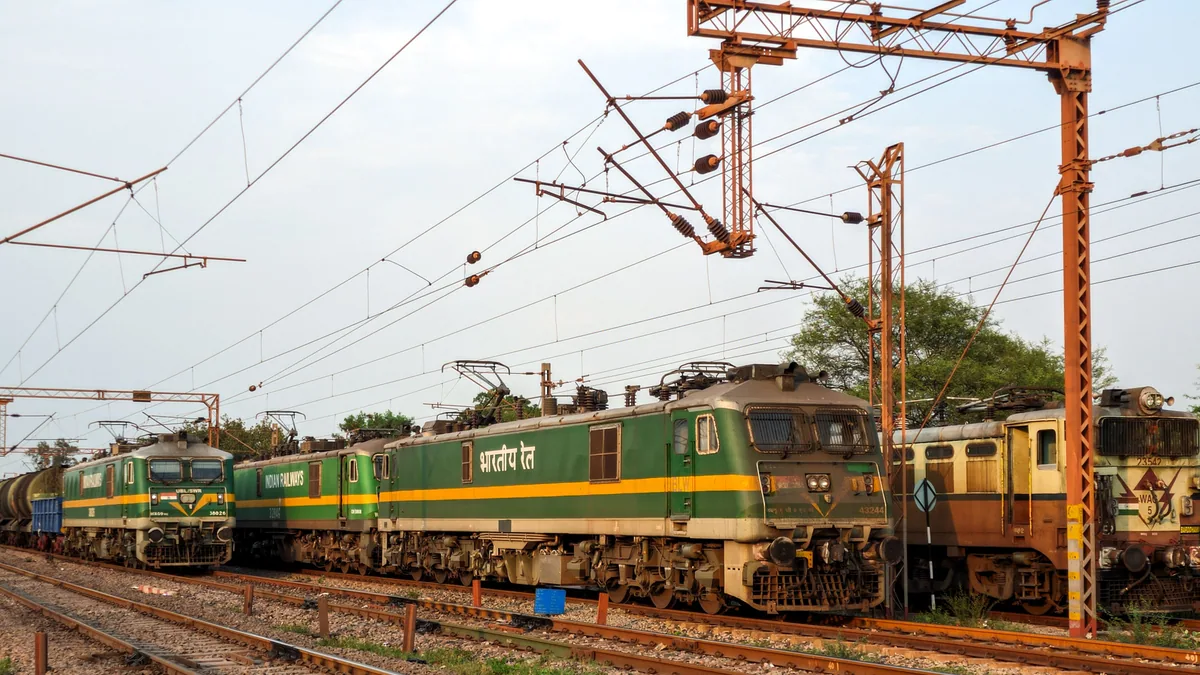
An eSIM India plan works hardest on the rails: Indian railway and highway journeys are long and signal drops in and out. Download offline maps and your ticket PDFs the night before — on hotel wifi, not on your data allowance.
The five specifications that decide an eSIM India plan
Five questions settle it, and the first one is unusual.
1. What you are actually buying. Be clear-eyed: an Indian prepaid SIM is dramatically cheaper per gigabyte than anything international, and no honest comparison pretends otherwise. What a travel profile buys is the removal of the KYC process — passport, visa, photograph, local address, and an activation delay that can run from a few hours to a day. On a ten-day trip that trade is easy. On a two-month stay it is not, and this page would rather say so.
2. Which network it rides on. Jio and Airtel have the widest 4G and 5G footprints; Vi is competitive in the metros and thinner in rural circles. One detail matters more in India than elsewhere: Jio runs an all-IP network with no 2G or 3G fallback, so where Jio has no 4G you have nothing rather than a slow connection. If your route leaves the main corridors, a plan with access to more than one network is more forgiving.
3. Whether validity starts on activation. India is a long flight from Europe, North America and Australia. A plan whose clock starts at checkout can lose a day or more before you clear immigration at Delhi or Mumbai.
4. Whether tethering is permitted. Long train journeys are the Indian case for this — a laptop on the Delhi to Varanasi run, or working from a hotel with unreliable wifi. Several plans meter or forbid hotspot use.
5. Whether it covers a wider Asian route. India is frequently paired with Sri Lanka, Nepal or the Gulf. A country profile stops at the border, and a regional plan costs less than stacking two.
What matters less than the marketing implies. Speed, and nobody can promise it anyway. Indian networks are heavily loaded — the subscriber numbers are enormous — so throughput dips at peak times regardless of which plan you hold. What you can control is coverage and paperwork, not megabits.
Cheap eSIM India options without under-buying
The cheapest eSIM India plan on any page is rarely the best value, because running out of data mid-trip means buying twice. The genuinely cheap eSIM India approach is to estimate your daily use honestly, add roughly 30% headroom, and offload heavy tasks to wifi.
Three habits cut consumption sharply:
- Set streaming apps to standard definition and download playlists and episodes before you fly.
- Turn off automatic photo and cloud backup on mobile data — go to your phone’s settings for iCloud or Google Photos and switch uploads to wifi only.
- Save offline maps for Delhi, Mumbai and anywhere else you’ll walk a lot, so navigation costs almost nothing.
If India is one stop on a wider itinerary, no single-country India eSIM will do: compare a single-country plan against a regional one. A multi-country Asia eSIM often works out cheaper than three separate country plans, and it saves you swapping profiles at every border. Atlas eSIM offers both single-country India plans and regional Asia coverage, so it’s worth checking which shape fits your route before you commit.
Get your India eSIM
Stay connected throughout India — instant activation, no roaming bill.
Find an eSIM for India and skip the roaming bill.
Check your phone, then install before departure
An eSIM India plan only works on compatible, unlocked hardware. Most flagship phones released from 2018 onward support it — recent iPhones, Google Pixels, Samsung Galaxy S and Note models — but there are regional exceptions, so verify your exact model rather than trusting the general rule. Our guide to phones that work with eSIM lists the common ones, and the GSMA is a good neutral reference on the technology itself.
Once you’ve bought an eSIM India plan, install it at home on wifi:
- Buy the plan and wait for the QR code (quick response code) to arrive by email.
- On iPhone, open Settings → Mobile Service → Add eSIM and scan the code. On most Android phones, open Settings → Network & internet → SIMs → Add eSIM.
- Label the new profile something obvious, like "India travel", so you can find it later.
- Leave the profile turned off, or set it to activate on arrival, depending on your plan’s terms.
- On landing, set the India profile as your mobile data line and turn data roaming on for that profile only.
- Keep your home SIM active for calls and SMS, and switch off its data to avoid roaming charges.
If the code refuses to scan, our QR code scanning fixes covers the usual causes, and the full installation walkthrough has screenshots for both platforms.
Before you fly, work through this:
- Confirm your phone is eSIM-capable and carrier-unlocked
- Install the eSIM profile while still on home wifi
- Download offline maps for your Indian cities
- Note whether any booking you rely on needs an Indian OTP
- Check current entry and safety guidance on your government’s India travel advice page
- Save your accommodation addresses offline for immigration forms and taxis

Five ways a cheap eSIM India plan costs you more
All five are visible before you pay.
Buying on price against a market you cannot beat. If cost per gigabyte is genuinely your criterion, buy an Indian tourist SIM at Delhi, Mumbai or Bengaluru airport and accept the paperwork. Choosing a travel profile and then resenting the premium is the wrong purchase, not a bad product.
The single-network plan on a rural route. Jio’s lack of any 2G or 3G fallback makes a coverage gap total rather than slow. In Rajasthan’s interior, the Northeast or the Himalayan foothills, that is the difference between a slow map and no map.
The validity that started at checkout. On a long-haul trip this is proportionally the worst version of the mistake. One line of the terms.
The UPI assumption. A data-only profile cannot give you UPI, because UPI needs an Indian bank account linked to an Indian mobile number. Travellers who expected to pay for auto-rickshaws by QR code the way residents do are disappointed by the account requirement, not by the plan. Cards work in hotels, restaurants and larger shops; cash covers the rest.
The unlimited label. Fair-use thresholds bite sooner than the word suggests, particularly if you are tethering on a long train journey where there is nothing else to do.
The under-bought bundle. India is where travellers most often under-buy. Long rail and road journeys mean hours of navigation and streaming, and the Wi-Fi at either end is unreliable. A moderate plan with in-app top-ups beats a small one you exhaust on day four.
When hotel wifi or a local SIM wins
Hotel wifi is fine for a one-night layover in Delhi where you never leave the terminal hotel. If that’s your trip, skip the eSIM entirely.
A local prepaid SIM is the better buy if you’re staying two months or more, if you need UPI payments or Indian OTPs, or if you’re on a tight budget and don’t mind the registration process. Plenty of long-stay travellers run both: a travel eSIM for the first 48 hours, then a local SIM once the paperwork is done. If you’re considering that route, how to keep your WhatsApp number explains how to avoid breaking your existing account.
For networks, coverage gaps and how much data you need, read our India eSIM travel guide.
Best eSIM India: frequently asked questions
Will a travel eSIM work as soon as I land in Delhi or Mumbai?
Yes, provided you installed the profile before flying and enable data roaming for it after landing. Registration on the local network usually takes a minute or two once your phone is out of airplane mode. If nothing appears after five minutes, toggle airplane mode or restart the handset.
How much data do I need for two weeks in India?
Most sightseeing travellers do comfortably on 5–10 GB for a fortnight, assuming hotel wifi in the evenings. Remote workers and heavy video users should look at 20 GB or more, or a plan that allows top-ups.
Do I get an Indian phone number with an eSIM?
Almost always no — travel eSIMs are data-only. Calls and messages work through WhatsApp, FaceTime or similar, but Indian services that send verification codes to a domestic number won’t reach you.
Is an eSIM cheaper than roaming with my home carrier?
For most travellers, substantially — daily roaming fees add up fast on a two-week trip. Our roaming cost comparison works through the maths, though you should still check your own operator’s India rates.
Can I use an eSIM to share data with my laptop?
Usually yes, if the plan permits tethering. Hotspot use consumes data much faster than phone browsing, so size up if a laptop is your main working device.
Get connected in India from the moment you land.
Which network should the best eSIM India plan use?
Jio or Airtel — both have the widest 4G and 5G reach. Vi is fine in the metros. The specific thing to know is that Jio has no 2G or 3G layer at all, so a coverage gap on Jio means no signal rather than a slow one. On a rural itinerary, prefer a plan that can reach more than one network.
Do I need to register my passport for an eSIM in India?
No. India’s KYC requirements — passport, visa, photograph, local address and a verification delay — apply to SIMs issued by Indian operators. A travel profile roams under an agreement your provider already holds, so there is nothing to file and no waiting period. That is the main thing you are paying for.
How much data should I buy for an Indian trip?
Five to ten gigabytes covers most two-week sightseeing itineraries. WhatsApp, maps and ride-hailing are all light; what consumes the allowance is photograph and video upload plus streaming on long train journeys. Buy moderately and top up rather than under-buying.
Can I use UPI with a travel plan?
No, and it is worth knowing before you land. UPI requires an Indian bank account linked to an Indian mobile number, so a data-only roaming profile cannot access it however good the connection is. In practice this matters less than it sounds — cards are accepted in hotels, restaurants and larger shops, and cash covers everything else.
Is a local SIM better value than a travel plan?
On price, substantially — Indian tariffs are among the cheapest in the world. On effort, no. Airport counters at Delhi, Mumbai and Bengaluru sell tourist packs and are the least painful route, but you still need documents and the activation can take hours. If you are staying more than about a month with a fixed address, the local SIM is clearly right.
Will my plan work in Ladakh or on a Himalayan trek?
Sometimes in the valley towns — Leh, Manali, Kaza — and rarely above them. Most trekking routes have nothing. Treat any Himalayan section as offline: download maps, carry printed permits where required, and tell someone your itinerary rather than relying on being reachable.
Why did my connection stop working in one state?
Possibly a localised internet shutdown, which Indian authorities order from time to time in specific districts. It affects every network and every SIM equally, including roaming profiles, and no provider can work around it. It is rare on the usual tourist routes but worth recognising for what it is rather than blaming the plan.
Should I buy one plan for the whole trip or several short ones?
One plan sized to the trip, provided its validity begins on activation. Stacking short plans means installing a new profile while travelling, which needs a working connection at exactly the moment you no longer have one.
India has a specific wrinkle. Consumption is wildly uneven: a city day on WhatsApp and ride-hailing uses very little, while a fourteen-hour train journey with nothing to look at can consume more than the previous three days combined. That unevenness makes a moderate bundle with easy in-app top-ups the most forgiving shape for a top eSIM India purchase — size it for the long-transit days rather than the average one.
Which eSIM India plan makes sense
Short business trip (3–7 days, Delhi or Mumbai). A small plan of around 3–5 GB is usually enough if you’re in meetings and hotels with wifi. Don’t buy a month of data for a four-day visit — the smaller plan genuinely is the right call here, and our notes on data for business travel cover expense-friendly setups.
Two to three weeks of sightseeing. Look at 10–15 GB with a matching 15–30 day validity. That covers maps, ride-hailing, translation and daily photo sharing without rationing, and leaves room for the long train or road days when you’re on your phone more than planned.
Remote work or a long multi-city stay. Choose the largest India plan available, confirm tethering, and plan to top up. If you’re in the country beyond a month, add a local SIM for an Indian number and keep the eSIM as backup — the digital nomad connectivity guide explains why two independent lines are worth it. For deeper destination detail, our India trip planning guide goes beyond connectivity.
Atlas eSIM covers India in single-country and regional Asia plans, so you can install the profile at home, land in Delhi or Mumbai with data already live, and decide about a local SIM later, once you’re settled.
Browse Atlas eSIM plans for India and get set up today.