

Travelling soon? Browse Switzerland eSIM plans and arrive connected.
How we make money: Atlas eSIM sells the plans linked in this guide, and we earn money if you buy one. Alternatives are covered with the same criteria. How we research and compare
Table of Contents
An eSIM works well in Switzerland, and for most visitors it is the least painful way to get online. A travel eSIM Switzerland plan connects you to one of the three national networks — Swisscom, Sunrise or Salt — the moment you land at Zurich, Geneva or Basel, with no shop queue and no passport registration form to fill in.
The important detail that catches people out: Switzerland is not in the European Union, so "roam like at home" allowances from an EU SIM often do not apply here. That single fact is why so many travellers arrive with a phone that suddenly costs money per megabyte.
An eSIM (embedded SIM) is a digital SIM profile you install on your phone before you fly, giving you mobile data in Switzerland from the second you switch off flight mode. Most travel plans roam onto Swisscom or Sunrise, both of which cover the cities, the main rail corridors and the major alpine resorts.
How we built this eSIM Switzerland guide
Switzerland is the European country where getting this wrong is genuinely expensive, so it matters where the claims below come from.
- Coverage comes from the federal regulator. OFCOM publishes independent coverage and quality measurements for all three Swiss operators, which is why the gaps named further down are specific tunnels and specific valleys rather than a vague note about mountains.
- Data figures come from our own activation records, grouped by trip type. A Zurich city break, an alpine hiking week and a rail pass itinerary consume very different amounts of Switzerland travel data, and a single average hides the difference that actually matters.
- We name competitors but never quote their prices. Travel eSIM pricing moves constantly, so you get the shape of each offer and an instruction to check the live figure before buying.
- The roaming trap is stated first, not last. Switzerland sits outside the EU roaming area, and that single fact is worth more to you than any product recommendation on this page. It is why the section below it exists.
- Nothing here is a fabricated travel anecdote. Where this guide describes a place — the Gotthard Base Tunnel, an SBB route, a cable-car station — it is describing verifiable infrastructure and published network data.
Last checked: September 2026.
Which networks carry your eSIM Switzerland connection
Switzerland has three network operators, and every prepaid SIM, MVNO and travel eSIM ultimately runs on one of them.
Swisscom is the former state operator and still has the deepest reach into the mountains, the valleys and the smaller villages. If a plan tells you it uses Swisscom, that is the safest option for anyone spending time above the treeline.
Sunrise is a close second in populated areas and has strong 5G in Zurich, Basel, Bern, Lausanne and Geneva. Coverage in remote alpine terrain is good but slightly thinner than Swisscom’s.
Salt is the third network. In cities and along the motorways it performs well; in the deep valleys of Graubünden or the Valais it can be the first to drop to a weak signal.
Travel eSIM Switzerland providers negotiate roaming access rather than owning towers, so your plan may connect to one of these networks or may switch between them depending on the agreement. If mountain coverage matters to you, check which network the plan lists before you buy.
Where the signal is strong, and where it is not
Switzerland has some of the best network coverage in Europe. The Swiss Federal Office of Communications publishes national coverage maps if you want to check a specific hamlet — you can find them via BAKOM. For practical purposes:
- Excellent: Zurich, Geneva, Basel, Bern, Lausanne, Lugano, Lucerne, Interlaken, Zermatt, St. Moritz and the airports at ZRH, GVA and Basel-Mulhouse (BSL).
- Good: most SBB rail routes, motorway corridors, lakeside towns, ski resort villages and their lower gondola stations.
- Patchy: long rail tunnels including the Gotthard Base Tunnel and the Lötschberg, narrow side valleys, remote hiking trails above 2,500 m, and some mountain huts.
You will notice the tunnels. A 57 km run under the Gotthard means roughly fifteen minutes with nothing at all, which matters if your train ticket lives in an app.
Switzerland travel data disappears under the Alps, so download your SBB ticket, your offline map of the region and your hotel address before you board a long-distance train. Swiss rail is punctual and fast, but no network reaches through solid granite, and half the Zurich–Lugano route is underground.
Why EU roaming stops at the border, and eSIM Switzerland does not
This is the single most expensive misunderstanding travellers have about Switzerland travel data.
Switzerland is inside the Schengen area, so you cross the border from Germany, France, Italy or Austria without a passport check. It is not in the EU, and it is not part of the EU’s regulated roaming zone. A German, French or Spanish SIM that gives you free roaming across 27 countries frequently treats Switzerland as a separate, chargeable destination.
Some European operators have voluntarily added Switzerland to their zone. Many have not, or include it only on their more expensive tariffs. The result is a phone that works normally in Milan and then starts billing per megabyte forty minutes later in Chiasso.
If you are travelling from the UK, the US, Canada or Australia, the situation is simpler and usually worse: standard roaming rates in Switzerland are among the highest in Europe. Our breakdown of roaming charges against eSIM pricing walks through how those daily passes add up on a week-long trip.
Two things to do before you leave:
- Open your carrier’s app or website and search for Switzerland by name. Do not assume "Europe" includes it.
- If it is excluded or charged separately, turn data roaming off on your primary line and use a travel eSIM instead.
How much Switzerland travel data you actually need
Buy Switzerland travel data for how you travel, not for the largest number on the page. Swiss hotels, cafés, museums, most SBB stations and many trains offer free Wi-Fi, which absorbs a meaningful share of your usage.
Rough daily Switzerland travel data guidance for a typical visitor:
- Light use — maps, messaging, a few searches, boarding passes, occasional email: around 200–400 MB per day.
- Moderate use — the above plus social media, photo uploads, music streaming, some video calls: roughly 500 MB–1 GB per day.
- Heavy use — hotspotting a laptop, video streaming, working remotely, uploading 4K clips from the Jungfraujoch: 1.5–2.5 GB per day or more.
For a standard week of sightseeing across Zurich, Lucerne and the Bernese Oberland, most travellers land comfortably inside 5 GB. A two-week trip with heavier phone use is better served by 10 GB. If you are working from a laptop over a hotspot, assume you will use more than you expect and pick a plan you can top up.
Three things quietly consume more Switzerland travel data than people plan for:
- Live transport apps. SBB Mobile, cable car status pages and weather radar get checked constantly, and mountain weather changes fast.
- Photo backup. Automatic cloud upload of a day’s alpine photography can run to several gigabytes. Set it to Wi-Fi only.
- Navigation in cities. Zurich’s old town and Bern’s arcades cause GPS drift, which prompts more map reloading than open roads do.
Setting up your travel eSIM Switzerland line before you fly
Install the eSIM Switzerland profile before you fly. It takes five minutes on your home Wi-Fi, and it means your phone connects automatically while you are still on the airbridge at Zurich Airport rather than while you are hunting for the free airport Wi-Fi portal.
The eSIM Switzerland installation sequence is the same across providers:
- Check that your handset supports eSIM and is carrier-unlocked. Most flagship phones from 2018 onward do — iPhone XS and later, Google Pixel 3 and later, Samsung Galaxy S20 and later — but model and region variants differ, so confirm your exact device against our list of handsets with eSIM support.
- Buy the plan and wait for the QR code (Quick Response code) or activation link to arrive by email.
- On iPhone, go to Settings → Mobile Service → Add eSIM and scan the code. On most Android phones, it is Settings → Network & internet → SIMs → Add eSIM.
- Label the new line clearly — "Switzerland" works — so you can tell it apart from your home line.
- Leave the new line switched off until you arrive, or switch it on and let it activate on landing, depending on whether your plan’s validity starts at purchase or at first connection.
- On arrival, set the Swiss eSIM as your mobile data line and turn data roaming on for that line only. Travel eSIMs are technically roaming profiles, so this switch must be on for them to work.
- Keep your home line active for calls and texts if you need it, with its own data roaming off.
If any step looks unfamiliar, the full installation walkthrough covers the menus screen by screen, and there is a troubleshooting guide for the rare cases where a profile fails to attach.
Activating after you arrive
You can install an eSIM in Switzerland at the airport after landing, provided you can get online briefly. Zurich, Geneva and Basel airports all have free Wi-Fi, as do most hotels and the SBB stations in major cities. What you cannot do is scan a QR code with no connection at all — so save the code and the activation email to your device before you fly, even if you plan to install it later.
An eSIM in Switzerland rarely needs manual settings. If data does not flow after activation, check that the Access Point Name (APN) matches what your provider specified, and that network selection is set to automatic.

Tunnels, cable cars and valleys: eSIM Switzerland in the mountains
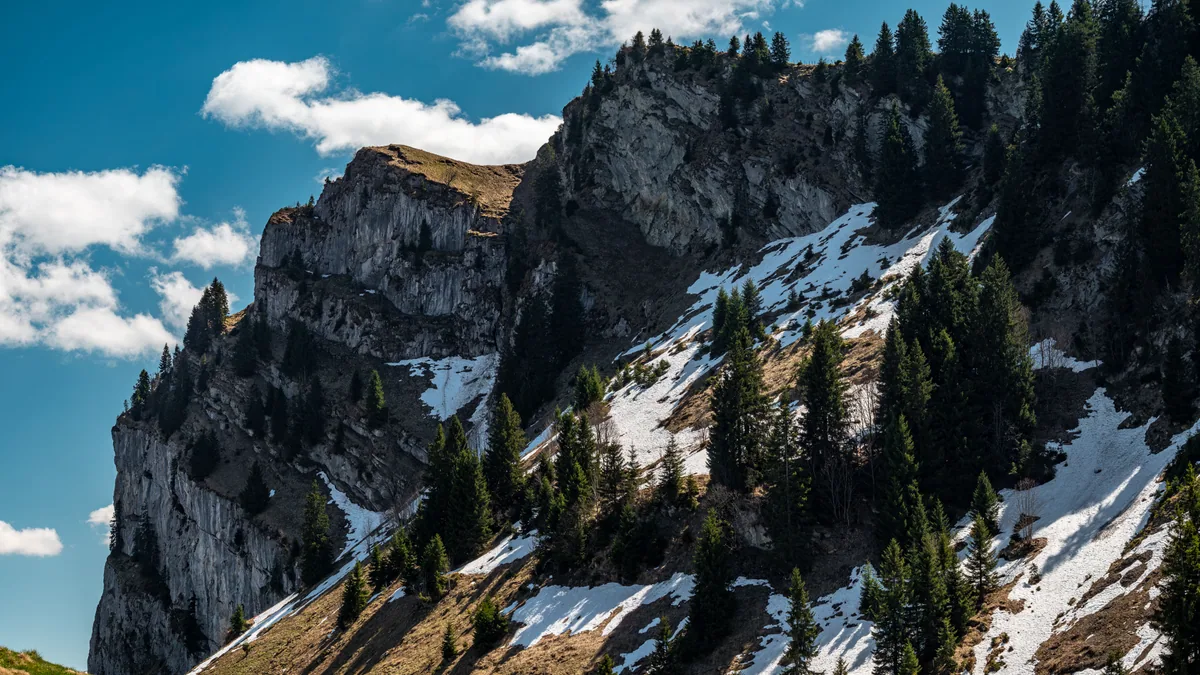
Switzerland has some of the best network coverage in Europe and some of the most reliably signal-free places in it, often within the same hour of travel. This is the detail a coverage map cannot show you.
The long rail tunnels. The Gotthard Base Tunnel runs 57 kilometres and takes roughly twenty minutes at speed, with no mobile service for the duration. The Lötschberg Base Tunnel and the Simplon do the same over shorter distances. If you are working on the train, that is a hard stop rather than a degradation — download what you need before Erstfeld or Frutigen.
The side valleys. Coverage in Switzerland follows the valley floors, the rail corridors and the resorts. The main valleys of Valais, the Bernese Oberland and Graubünden are well served. Narrow tributary valleys — Val Bregaglia’s upper reaches, the Binntal, the Val Bavona, the back of the Lauterbrunnen valley — are shadowed by rock on both sides, and the drop is abrupt.
Above the treeline. Resort villages and the top stations of major cable cars are generally covered, because the operators put sites there deliberately. The ground between them is not. On a Haute Route or Tour du Mont Blanc stage, or on the ridges above Zermatt and Grindelwald, assume a travel eSIM Switzerland plan gives you signal at the huts and nothing reliable between them. This is a safety point as much as a convenience one: the Swiss emergency number 112 works on any network with any signal, including one your own plan cannot otherwise use, but it still needs a usable cell.
The trains themselves. SBB’s main-line rolling stock has signal repeaters, so an InterCity between Zurich, Bern, Lausanne and Geneva holds a connection well outside the tunnels. Regional and mountain railways — the Rhaetian Railway over the Bernina, the Glacier Express route, the rack lines up to Jungfraujoch — have long stretches where they do not.
The borders. Switzerland is small and the frontier is never far. Near Basel, Geneva, Chiasso and the Lake Constance shore your phone can register on a German, French, Italian or Austrian network without telling you. If your plan is Switzerland-only that means no data until you move; if it is an EU plan it means the opposite problem. Setting the network selection to manual for a day is the cure when it happens repeatedly.
Liechtenstein. It uses Swiss infrastructure and most Switzerland eSIM plans include it, but not all of them say so. If Vaduz is on the itinerary, check the coverage list rather than assuming.
Explore Switzerland data plans — activation takes a couple of minutes.
Comparing eSIM Switzerland with the local options
Here is how the realistic choices stack up for a visitor spending a few days to a few weeks in Switzerland.
| Option | Setup time | ID required | Keeps your number | Best for |
|---|---|---|---|---|
| Travel eSIM | 5 minutes, before you fly | No | Yes, home line stays active | Trips of 3 days to a month |
| Swiss prepaid SIM (Swisscom, Salt, Sunrise, M-Budget, Coop Mobile) | 20–40 minutes in-store, plus registration | Yes, passport | No, you swap the SIM out | Long stays, calls to Swiss numbers |
| Home carrier roaming | None | No | Yes | Very short stops, or if Switzerland is genuinely included in your plan |
| Pocket Wi-Fi rental | Book ahead, collect and return | Usually | Yes | Groups sharing one connection, non-eSIM devices |
| Free Wi-Fi only | None | No | Yes | Budget trips where offline maps are enough |
A few notes on the alternatives to an eSIM in Switzerland, because they are legitimate choices.
Swiss prepaid SIM cards are sold at Swisscom, Sunrise and Salt shops, at Migros (M-Budget Mobile) and Coop (Coop Mobile), and at airport kiosks. Swiss law requires prepaid lines to be registered to an identified person, so you will need your passport and the shop assistant will need to complete the registration. Prices for tourist bundles are not low by European standards, though they include a Swiss number for calls.
Pocket Wi-Fi makes sense for a family of five sharing one device, or if you are carrying a camera or tablet with no eSIM. It also means an extra battery to charge, a collection point at the airport and a return before you fly home.
Free Wi-Fi genuinely covers more than you expect. If your itinerary is hotel-to-museum-to-restaurant in Zurich and Bern, you could survive on it with offline maps. You will not enjoy navigating an unfamiliar valley on a Sunday afternoon without a signal.
Atlas eSIM plans for Switzerland cover a range of durations and data sizes, so you can match the plan to the trip rather than paying for a month of data on a four-day break.

The eSIM Switzerland provider landscape, honestly
Because Switzerland falls outside EU roaming, the market here is busier and the differences between sellers matter more than in neighbouring countries. We name the players and describe how each is built, but we do not publish their prices — those move constantly and a figure quoted here would be wrong by the time you read it.
The large marketplaces. Airalo and Nomad resell wholesale roaming capacity worldwide. Breadth is the appeal: an eSIM Switzerland purchase alongside the rest of a European itinerary in one app. The trade-off is that you rarely know in advance whether you will land on Swisscom, Sunrise or Salt, and in Switzerland that distinction is more consequential than it is in the Netherlands.
The unlimited-data specialists. Holafly’s daily unlimited model suits a short, heavy trip. Read the fair-use terms carefully: unlimited almost always means full speed to a daily threshold and throttled after, and tethering restrictions are common — which matters if you were planning to work from a chalet.
The carrier-backed options. Ubigi runs on Transatel, owned by NTT Docomo, and Saily comes from the Nord Security group. Both are more transparent about the underlying network and both let you top up mid-trip without installing a fresh profile.
The Swiss operators. Swisscom, Sunrise and Salt sell prepaid bundles, and Swisscom in particular has the coverage advantage in the mountains. The obstacle is procedural: Switzerland requires identity registration for a locally issued SIM, so you queue at a shop with your passport rather than installing an eSIM in Switzerland from your sofa the week before. On a stay of a month or more that queue is worth joining.
Watch the regional plans. This is the specifically Swiss trap. Many "Europe" bundles exclude Switzerland entirely, and several that include it charge a different rate or a separate allowance. If your trip runs Milan–Zurich–Munich, check the country list line by line before you buy rather than assuming a European plan covers the middle leg.
Competitor details last checked: September 2026.
When an eSIM in Switzerland is the wrong choice
Being honest about this matters more than a sales pitch for a travel eSIM Switzerland plan.
- A layover under six hours. Zurich Airport’s free Wi-Fi will get you through a connection to Vienna. Skip the plan.
- A phone without eSIM support. Older handsets, some regional variants and many budget Androids do not have the hardware. A physical prepaid SIM is your route.
- A carrier-locked phone. If your device is locked to your home operator, an eSIM profile from another provider will not attach.
- You need a Swiss phone number. Booking a mountain hut, confirming a restaurant reservation or receiving an SMS from a Swiss service is easier with a local number. Most travel eSIMs are data-only.
- A multi-month stay. For anything beyond a few weeks, a Swiss prepaid or contract plan usually works out better and gives you a number people can call.
For everyone else — a week in the Alps, a business trip to Geneva, a rail loop through Lucerne, Interlaken and Lugano — a travel eSIM is the least friction for the money. If Switzerland is one stop on a wider European itinerary, plan the neighbouring legs too; our guide to getting online in Germany covers the border regions around Basel and Konstanz.
Pre-departure checklist
- Confirm your handset supports eSIM and is unlocked
- Check whether your home plan charges extra for Switzerland specifically
- Buy and install the eSIM profile on home Wi-Fi, and label the line
- Save the QR code and activation email to your phone
- Download offline maps for your regions, including the alpine valleys
- Download SBB tickets and the Swiss Travel Pass to your device
- Set photo backup to Wi-Fi only
- Turn data roaming off on your home line before boarding
- Note that 112 and 144 reach emergency services regardless of which SIM you use
Switzerland eSIM: frequently asked questions
Does an eSIM give me a Swiss phone number?
Usually not. Most travel eSIMs are data-only, which is fine for WhatsApp, Signal, FaceTime and internet calls. If you need to receive SMS from a Swiss business or bank, keep your home number active alongside the eSIM or buy a local prepaid SIM.
Will my eSIM work on the trains and in the mountains?
On the main SBB routes and in the resort villages, yes. Long tunnels such as the Gotthard Base Tunnel have no coverage, and signal thins out on high trails and in narrow valleys, so download offline maps and tickets before you set off.
Can I use the same eSIM in France, Italy or Germany?
Only if the plan explicitly includes those countries. Because Switzerland sits outside the EU roaming zone, many regional plans treat it separately — check the country list before you buy if your trip crosses the border to Chamonix, Como or the Black Forest.
Is 5G available with a travel eSIM in Switzerland?
Swiss 5G coverage is extensive in cities and along major corridors, and many travel eSIMs support it where the host network allows. Your actual speed depends on the network your plan uses, your handset and local congestion, so treat 5G as a bonus rather than a guarantee.
What happens to my data when I leave Switzerland?
The plan stops working once you leave its coverage area, and any unused data typically expires at the end of the validity period. If you are continuing to a neighbouring country, either buy a regional plan or install a second profile before you travel. To understand how the technology handles this, see our explainer on how eSIM profiles work, and the GSMA publishes the industry standards behind them.
Does my EU roaming allowance work in Switzerland?
No, and this is the expensive one. Switzerland is not in the EU or the EEA, so "roam like at home" does not apply. Some European operators have added Switzerland to their roaming zone voluntarily and some charge per-megabyte rates that produce genuinely alarming bills. Check your own contract’s country list before you travel — not the general EU rule.
Which network should an eSIM Switzerland plan connect to?
Swisscom if the itinerary goes into the mountains. It has the most sites in the alpine valleys and the best coverage in the side valleys where the other two thin out. Sunrise and Salt are strong across the plateau — Zurich, Bern, Basel, Lausanne, Geneva — and the difference there is negligible.
How much Switzerland travel data does a week actually use?
Two to five gigabytes for most visitors. Hotels, most SBB stations, museums and cafés have Wi-Fi, so mobile data mainly carries navigation, timetables, messaging and photographs. A rail-pass trip pushes it higher because you check connections constantly; hiking pushes it lower because there is nothing to connect to for much of the day.
Will my eSIM work on the Glacier Express and the Bernina line?
Intermittently. Both routes run through terrain that blocks signal for long stretches, and neither has the repeater fit of the main-line InterCity stock. You will have coverage at the stations and in the villages, and gaps between them. Download the route map and your tickets before boarding.
Two companion pages depending on why you are going. The Swiss business travel guide covers the border-roaming trap and the expense side; the digital nomad guide covers staying for weeks rather than days, where a local contract starts to beat a travel plan.
Pick your Switzerland data plan in a few taps.
Before you go
Three things decide whether your Swiss trip is smooth or irritating: knowing that your EU allowance probably stops at the border, downloading offline maps for the tunnels and valleys, and having your data line already installed when the wheels touch down.
Set the eSIM up at home on Wi-Fi rather than in the arrivals hall — five minutes on your sofa beats twenty minutes standing under the departure boards at Zurich Airport.
When you are ready, Atlas eSIM has Switzerland plans in a range of data sizes and durations, so you can pick 3 GB for a long weekend in Lucerne or 10 GB for a fortnight of hotspotting through the Alps.
Ready to stay connected? Choose your Switzerland eSIM.