


Table of Contents
The right business travel Switzerland data plan is one you install before you leave, that connects automatically at Zurich or Geneva airport, and that produces a receipt your finance team will accept without a follow-up email. For most trips of two to seven days, that means a prepaid travel eSIM (embedded SIM) of 3–10 GB, bought in advance and expensed as a single line item.
How we make money: Atlas eSIM sells the plans linked in this guide, and we earn money if you buy one. Alternatives are covered with the same criteria. How we research and compare
Business travel Switzerland is not covered by EU rules, because the country is not in the European Union, which is the detail that catches out travellers arriving from Frankfurt, Milan or Paris. Your EU "roam like at home" allowance does not apply here, and the per-megabyte rates that replace it are among the highest in Europe. This guide covers what actually works on the ground: which networks you’ll connect to, how much data a working week really uses, when to set up, and how the local alternatives compare.
Quick answer: Switzerland sits outside the EU roaming zone, so EU SIM cards revert to expensive out-of-bundle rates. A travel eSIM installed before departure gives you data on Swisscom, Sunrise or Salt at a fixed, pre-paid price with an instant receipt.
How this business travel Switzerland expense guide was built
Business travel guides are usually written for the traveller and ignore the person who approves the claim. This one tries to serve both, so here is what it rests on.
- Coverage claims come from OFCOM, the Swiss federal communications office, together with the operators’ published coverage, which the regulator audits rather than from an operator’s marketing map, which is why the weak spots named below are specific places and specific rail lines.
- Data estimates come from our own activation records, grouped by trip shape rather than averaged. Three days of meetings and a week of site visits are not the same trip, and one number that covers both is useful to neither.
- The bill is weighted above the bars of signal, because on this route the money is the problem rather than the coverage. Swiss networks are excellent. Swiss roaming, for anyone whose operator does not voluntarily include the country, is among the most expensive in Europe — and the charge arrives a month later on a personal bill, which is exactly the shape of expense claim that gets queried.
- We name competitors and never publish their prices. Travel data pricing moves weekly and a figure here would be wrong within the month. You get the shape of each option and an instruction to check the live number.
- Nothing on this page is tax or accounting advice. VAT treatment, per-diem rules and what your own finance team will accept vary by company and by jurisdiction. What we can describe is what a clean receipt looks like and why an unexplained roaming charge is the line that gets queried.
Last checked: September 2026.
Business travel Switzerland expense: the networks you connect to
Switzerland travel data runs on three mobile network operators, and all three are unusually good by European standards.
For Switzerland travel data, Swisscom is the former state incumbent and generally leads independent coverage tests, particularly in Alpine valleys and on rail routes. Sunrise (which absorbed UPC and later separated from Liberty Global) is a close second in urban areas. Salt is the smaller challenger, strong in cities and along the main motorway corridors.
For business travel Switzerland, the practical implication is simple: in Zurich, Geneva, Basel, Bern, Lausanne, Lugano and Zug, all three networks deliver reliable 4G and widespread 5G. You do not need to agonise over which one your plan uses. A travel eSIM typically connects to whichever partner network is strongest at your location, and may switch between them.
Where the Switzerland travel data choice starts to matter is off the main axis. If your trip involves a site visit in the Jura, a client retreat in Verbier or Zermatt, or driving between smaller cantonal towns, Swisscom’s rural footprint is the most consistent. Ask your provider which networks their Switzerland plan uses if mountain coverage is critical to your itinerary.
Trains, tunnels and Switzerland business trip data
Swiss rail is where a lot of business travel Switzerland work actually happens, and coverage on the main SBB lines is good but not perfect. The Zurich–Bern–Geneva route holds a solid signal for most of its length. Longer tunnels — the Gotthard Base Tunnel on the way to Lugano runs 57 kilometres — will drop your connection entirely.
Download what you need before boarding to save Switzerland business trip data. If you have a call scheduled during a tunnel stretch, move it. SBB’s on-board Wi-Fi is essentially a portal that routes you through the mobile network anyway, so it fails at the same moments your phone does.
Business travel Switzerland starts awkwardly: Zurich Airport’s free Wi-Fi requires an SMS verification code sent to your number. If you land with your home SIM disabled and no data plan active, you cannot receive the code — a small trap that catches travellers every week. An eSIM that activates on landing sidesteps it entirely.
How much Switzerland business trip data a trip uses
Most travellers overbuy Switzerland business trip data. Here is a realistic picture based on typical business usage patterns, assuming your hotel and office both have Wi-Fi.
- Email, messaging, calendar, maps, boarding passes: roughly 200–400 MB per day
- Add ad-hoc video calls (30–60 minutes daily on mobile data): add 500 MB–1 GB per day
- Add hotspot tethering for a laptop doing real work: add 1–2 GB per day
- Add streaming on the train or in the evening: add 1–3 GB per day
A two-day business travel Switzerland trip to Zurich for meetings, with hotel Wi-Fi in the evenings, will rarely exceed 2 GB. A five-day trip involving conference days, tethering at a venue with unreliable guest Wi-Fi, and Teams calls between sites can comfortably reach 8–10 GB.
The practical Switzerland travel data approach: estimate your daily average, multiply by trip length, then add roughly 50%. Running out mid-trip and having to top up in a hurry costs more time than the extra gigabytes cost money. If you regularly work from client offices with locked-down guest networks, size up — a laptop pulling updates and syncing a document library will eat a plan faster than any phone.
Video calls decide your Switzerland travel data
A one-to-one video call is the biggest single Switzerland business trip data cost. On Zoom or Teams it uses roughly 500 MB to 1 GB per hour at standard quality. Group calls with multiple video feeds go higher. If your Swiss week involves back-to-back remote meetings from a café in Basel or a train seat between Lausanne and Zurich, that single line item will dominate your consumption.
Two habits cut Switzerland travel data sharply: turn off your own outgoing video when you don’t need it, and set your client to a lower resolution before you travel rather than during a call.
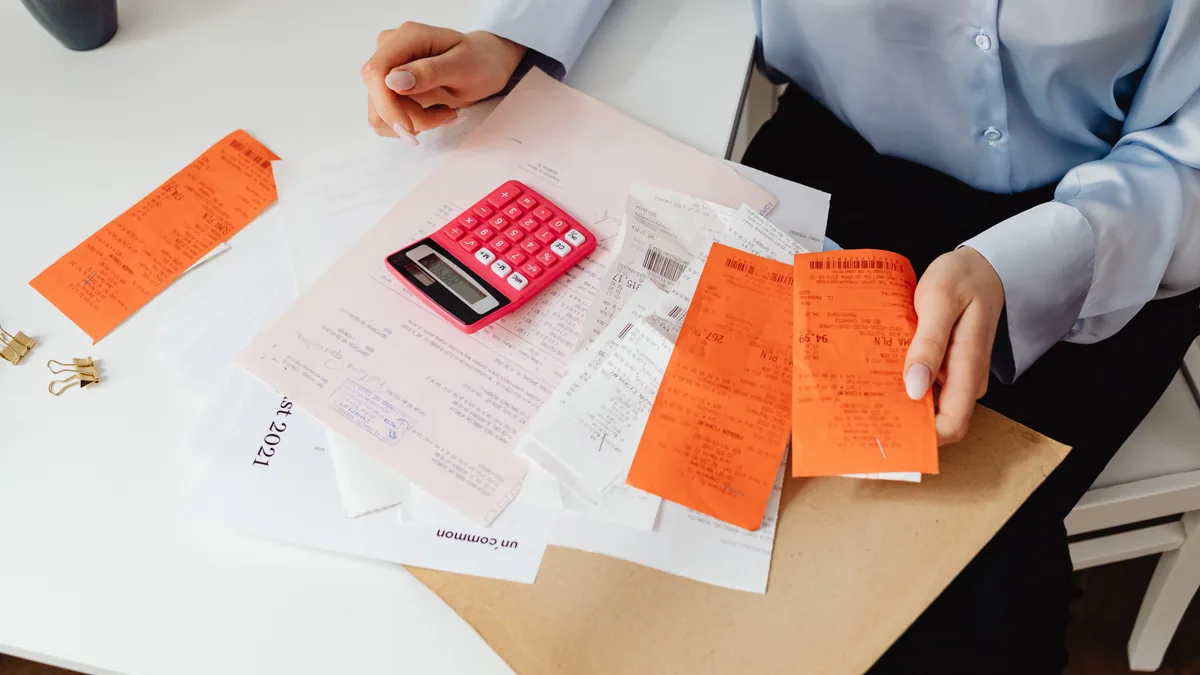
Where the money actually goes on a Swiss trip
Everything in Switzerland costs more, which makes the connectivity line unusually easy to get wrong in both directions. Here is where the cost genuinely sits.
Coverage figures quoted below come from OFCOM, the Swiss Federal Office of Communications, which audits what the three operators publish.
The roaming charge nobody authorised. If your operator does not voluntarily include Switzerland, standard roaming rates apply and they are high. Worse, the charge does not appear until the monthly bill, by which point the trip is closed, the claim is filed, and you are asking finance to reopen it for a number you cannot explain. This is the single most common way a Swiss business trip generates an awkward conversation.
The border that doubles the bill. Geneva is minutes from France, Basel touches France and Germany, Ticino runs along Italy. A handset registers on the strongest mast rather than the right country, so a Switzerland-only plan can stop working while you are standing in Switzerland — and a per-country roaming tariff can bill you for two countries in one afternoon. Buy something that names Switzerland and its neighbours.
The hotel that charges for wifi. Rarer than it was and not extinct, particularly in older properties and at conference rates. Where it exists it is charged per device per day and is not worth the argument.
What a clean Swiss claim looks like. One invoice, dated inside the trip, in a currency your finance team recognises, for a named product at a price they can verify. Against a Swiss roaming charge on a personal bill, that comparison is not close, and it is the reason the expense case here is stronger than the pure price case.
Where the price case is genuinely weaker. If your employer’s corporate tariff already includes Switzerland — and some do — then buying a second plan is duplication, and an audit will treat it as such. Check first. We would rather say this than sell you something you already have.
The local SIM, honestly assessed. Swiss prepaid is expensive by international standards and requires identity registration at a counter, so it loses on both price and friction for a short trip. It wins on a relocation of a month or more, where a Swiss number starts to matter.
What actually works. Check the corporate tariff by name, buy a plan covering Switzerland and its neighbours, and file the invoice with the flight confirmation rather than hunting for it in October.
Comparing your options for Switzerland travel data
Here is how the realistic Switzerland travel data choices stack up for a business traveller.
| Option | Setup time | Where you get it | Price predictability | Expense receipt | Best for |
|---|---|---|---|---|---|
| Travel eSIM | 5 min, before departure | Online, any time | Fixed, paid upfront | Instant email invoice | Most trips of 1–14 days |
| Home carrier roaming add-on | 2 min, via app | Your operator | Fixed if you buy a bundle; punitive if you don’t | Appears on the monthly bill, weeks later | Travellers whose employer pays the phone bill anyway |
| Pay-as-you-go roaming | None | Automatic | Poor — the classic bill shock | Buried in a phone bill | Nobody, deliberately |
| Local prepaid SIM (Swisscom, Sunrise, Salt) | 30–60 min, on arrival | Airport shops, Interdiscount, operator stores | Fixed | Paper till receipt | Long stays of a month or more |
| Hotel and venue Wi-Fi only | None | On site | Free | None needed | One-night stopovers with no mobile work |
Two Switzerland corporate travel points stand out. First, the local SIM is genuinely competitive on price for longer stays, but it costs you an hour on arrival, requires identity registration under Swiss law, and hands you a paper receipt in Swiss francs that your expense system will convert at whatever rate it feels like. Second, pay-as-you-go roaming outside a bundle is the only option here with no ceiling — which is precisely why finance departments dislike it.
If you want the arithmetic broken down more fully, our eSIM versus roaming cost comparison works through the numbers for several trip lengths.
The business roaming Switzerland trap for EU travellers
This business roaming Switzerland problem deserves its own warning. If you hold a phone contract from Germany, France, Italy, Austria or any other EU or EEA country, your regulated roaming allowance covers the EU and EEA. Switzerland is in neither.
Some operators voluntarily include business roaming Switzerland in their EU zone — Swisscom’s own neighbours often do, and several German and Austrian providers extend coverage as a commercial gesture. Many do not. Some include it on premium tariffs only. The result is that switzerland business roaming charges vary wildly between colleagues on different plans travelling to the same meeting.
Check your specific business roaming Switzerland tariff’s fair-use documentation before you assume. And be aware of a quirk of Swiss geography: in Geneva, Basel and along the Lake Constance shore, your phone can latch onto a French, German or Austrian tower while you are physically in Switzerland — or, more expensively, onto a Swiss tower while you sit in a French border town. Border-region billing surprises are real.
Setting up Switzerland travel data before departure
Set up Switzerland travel data before departure. The reasons are practical rather than dogmatic.
An eSIM is installed by scanning a QR (quick response) code or tapping an activation link, and that installation step needs an internet connection. Your home Wi-Fi is a reliable place to do it. An airport departure lounge is usually fine too. A Swiss airport arrivals hall, where you may have no data and a Wi-Fi portal demanding an SMS code, is the worst possible moment to discover a problem.
Here is the business travel Switzerland sequence that works:
- Two or three days before you fly, confirm your handset supports eSIM. Most flagship phones from 2018 onward do, including iPhone XS and later, Google Pixel 3 and later, and Samsung Galaxy S20 and later. Check your exact model — our guide to which phones support eSIM lists the common ones, and Apple and Google both publish official device lists.
- Confirm the handset is carrier-unlocked. Corporate devices supplied by an IT department are sometimes locked to the company’s operator. Ask before you buy anything.
- Buy and install the eSIM on your home Wi-Fi. On iPhone: Settings → Mobile Service → Add eSIM. On most Android handsets: Settings → Network & internet → SIMs → Add eSIM. The full walkthrough is in our step-by-step eSIM installation guide.
- Label the line clearly — "Switzerland work" rather than the default provider name — so you know which one you’re toggling at 06:00 in a taxi.
- Leave the new line switched off until you land. Keep your home SIM active for calls and SMS at home.
- On landing at Zurich (ZRH), Geneva (GVA) or Basel–Mulhouse (BSL), switch the travel line on, set it as your mobile data line, and enable data roaming for that line only.
- Turn data roaming off on your home SIM in the same settings screen. This is the single step that prevents an unwanted charge, and it takes ten seconds.
On business travel Switzerland, keep your home number active for two-factor authentication SMS. Dual SIM means you do not have to choose: your home line handles texts, the travel eSIM handles data. That combination is what makes an eSIM work for business rather than just for holidays.
If something does not connect within a few minutes of landing, the usual culprits are a disabled line, data roaming left off, or an APN (access point name) that needs manual entry. Our eSIM troubleshooting guide covers the fixes in order.
Making the business travel Switzerland expense report painless
The business travel Switzerland expense side is where a prepaid plan quietly wins, and it is worth spelling out for anyone who submits claims.
A prepaid Switzerland travel data plan gives you a dated invoice, in a single currency, for a single amount, sent to your inbox at the moment of purchase. You can attach it to the expense claim before your flight boards. There is no reconciliation against a monthly phone bill that arrives three weeks later, no apportioning of a shared family plan, and no awkward conversation about whether the €89 roaming line was work or the kids’ holiday videos.
A few business travel Switzerland expense habits worth having:
- Buy with the card your company expects you to use, or your personal card if you claim reimbursement — but be consistent across trips.
- Save the invoice PDF to the trip folder immediately. It is far easier than retrieving it later.
- If your employer runs a corporate eSIM Switzerland policy, check whether they have a preferred provider before buying your own. Some finance teams pre-approve a per-trip data allowance; others want it on the phone bill.
- Note the plan size and dates in the expense description. "Switzerland data 5 GB, 12–17 Sept" answers the reviewer’s question before they ask it.
Atlas eSIM plans for Switzerland issue the invoice at purchase and cover the country from short multi-day allowances upward, which is generally the shape a business trip needs.

The provider landscape for business travel Switzerland
We name the alternatives and describe how each is built. Prices are left out deliberately, because they change faster than this page does.
The large marketplaces. Airalo and Nomad resell wholesale roaming capacity worldwide and are easy to buy from on a corporate card. Read the country list rather than the region name. A great many European bundles exclude Switzerland outright or price it as a separate zone, and the ones that include it alongside France, Germany, Italy and Austria are the ones worth having, because all four are an hour from somewhere a Swiss itinerary goes. The trade-off is the same everywhere: limited visibility of which network actually carries you, which matters on the day you leave the capital.
The unlimited-data specialists. Holafly sells daily unlimited plans, which suit a trip whose shape you cannot predict. Read the fair-use terms, and read the tethering clause carefully — on a work trip the laptop is the machine that matters, and a plan that forbids tethering is not a business plan.
The carrier-backed options. Ubigi runs on Transatel, which is owned by NTT Docomo, and Saily comes from the Nord Security group. Both tend to be clearer about the underlying network and both handle mid-trip top-ups cleanly, which matters when a two-day trip becomes four.
Your employer’s own roaming deal. Worth checking before buying anything. Large corporate mobile contracts frequently include roaming bundles that are already paid for, and buying a second plan on expenses when one exists is the kind of thing an audit finds. Ask what the corporate plan covers and what it charges beyond that, because the answer is often generous inside one region and punishing outside it.
The local route. Swisscom, Sunrise and Salt run the three networks, and Swisscom reaches furthest into the alpine valleys. Swiss law requires prepaid registration, so it is a passport and a counter rather than a shelf purchase, and Swiss prepaid pricing is high by any standard. It also produces a till receipt rather than the invoice a finance team wants, which on this particular page is the deciding objection.
What actually separates them for work. Tethering permission, which network carries you, whether you can top up without reinstalling anything, and whether the purchase produces an invoice your finance team will accept. For a business travel Switzerland expense claim the deciding question is whether the purchase produces one verifiable invoice and whether it survives the border.
Competitor details last checked: September 2026.
VAT, policy and the questions an audit asks
Every guide on this subject explains that a clean invoice beats a roaming charge. Almost none of them go on to the part that actually delays reimbursement, so here it is.
Swiss VAT is low by European standards and, because Switzerland sits outside the EU, recovery for a foreign business runs through a separate Swiss procedure with its own registration and thresholds rather than the EU refund mechanism. On a data plan the amount at stake is small and the process is disproportionate, so most finance teams expense the gross figure and move on. Keep the invoice intact regardless — whether to pursue recovery is a decision for finance, and they cannot make it from a cropped screenshot.
Per-diem versus itemised. If your employer pays a daily allowance intended to cover incidentals, a separately claimed data plan may be treated as already covered and refused. That is not unreasonable, and it is worth knowing before you buy rather than after. Where the trip is unusually connectivity-heavy — a site visit with live video, a conference you are presenting at remotely — say so in the claim rather than hoping nobody notices the line.
Pre-approval thresholds. Many travel policies require sign-off above a fixed amount, and the threshold is often low enough that a multi-week regional plan crosses it while a single-trip plan does not. Splitting a purchase to stay under a threshold is the wrong answer and reads badly in an audit; asking first is the right one and takes a single message.
What an audit actually checks. Three things, in our experience of what gets queried: that the date of the invoice falls inside the trip window, that the amount matches a price the reviewer can verify independently, and that the same cost has not also been claimed somewhere else — most often as part of a hotel bill or an existing corporate roaming bundle. All three are satisfied by buying one named product in advance and filing the confirmation with the flight.
Personal use on a work plan. A data plan bought for a business travel Switzerland trip will inevitably carry some personal messaging, and no sensible policy expects otherwise. What causes problems is the reverse: claiming a plan that outlives the trip, or a regional plan bought for a personal holiday attached to the end of a work trip. If the trip has a personal leg, the honest approach is to claim the portion that covers the work days and say so.
The company phone question. If the handset is employer-issued and managed, profile installation may be blocked by device policy, and no amount of correct purchasing changes that. Ask IT before the trip, not at the airport — the answer sometimes requires a policy change rather than a setting. Currency is the other Swiss wrinkle: a claim converted weeks later at a different rate can differ from what you paid, which is an argument for buying in your own currency where the option exists.
When business travel Switzerland needs something else
Being honest about the limits for business travel Switzerland:
Pros
- Set up before you fly; connected within a minute of landing
- Fixed price with no out-of-bundle exposure
- Instant, expense-ready invoice
- Keeps your home number live for two-factor codes
- No queue at an airport counter, no passport registration
Cons
- Data only on most travel plans — no Swiss phone number for local calls
- Requires an eSIM-capable, unlocked handset
- Per-gigabyte cost is higher than a local prepaid SIM on stays of a month or more
- Not useful if your company already includes Switzerland in an unlimited corporate roaming bundle
Skip the Switzerland travel data purchase if you are transiting Zurich for four hours between flights — airport Wi-Fi will do. Skip it if your employer’s tariff genuinely covers Switzerland at no extra cost; check the fair-use policy and then stop worrying. And if you are relocating for a three-month project in Zug, walk into a Swisscom or Salt store in the first week and get a local contract with a Swiss number. You will want the number for deliveries, banking and appointments anyway.
For a broader look at the country beyond the working week, our Switzerland eSIM travel guide covers leisure use, and if your itinerary chains several countries together, the business travel Germany guide covers the northern leg.
Business travel Switzerland expense: frequently asked questions
Does my EU roaming allowance work in Switzerland?
Usually not. Switzerland is outside the EU and EEA, so regulated "roam like at home" rules do not apply. Some operators voluntarily include Switzerland on certain tariffs, so check your plan’s specific terms rather than assuming.
How much data do I need for a five-day trip to Zurich?
For email, maps, messaging and light calls with hotel Wi-Fi in the evenings, 3–5 GB is usually comfortable. If you’ll be tethering a laptop or running daily video calls on mobile data, plan for 8–10 GB instead.
Will I get 5G in Switzerland?
Yes, in most urban areas. Swisscom, Sunrise and Salt all operate extensive 5G networks covering Zurich, Geneva, Basel, Bern and Lausanne, with 4G filling in almost everywhere else. Your handset needs to support 5G on the relevant bands.
Can I keep my work number while using a travel eSIM?
Yes, on any dual-SIM handset. Keep your home SIM active for calls and two-factor authentication texts, set the travel eSIM as your mobile data line, and switch data roaming off on the home line to avoid charges.
Is a local Swiss SIM card cheaper?
For stays of a month or more, often yes. For a trip of a few days it rarely justifies the arrival-day time cost, the identity registration required under Swiss law and the loss of your home number for incoming texts.
What makes a Swiss expense claim awkward?
A roaming charge. It arrives a month after the trip, on a personal bill, bundled with your household usage, at a rate nobody outside your operator can verify. By the time it lands the claim is closed. A dated invoice bought before departure avoids all four problems, which is the real argument here — not that it is always cheaper, but that it is always explicable.
Should I buy anything if I am only transiting?
Probably not. A few hours at Zurich airport with free wifi and a single meeting does not justify a plan, and we would rather say so. The same applies if your corporate tariff already names Switzerland — buying twice is exactly what an audit picks up.
Before you go
Three business travel Switzerland things to square away before the flight:
- Confirm what your own operator charges for Switzerland specifically, in writing, so you know what you’re comparing against.
- Install and label your data line at home on Wi-Fi, then leave it switched off until you land at Zurich or Geneva.
- If your trip is short and your company reimburses per-trip expenses, an Atlas eSIM Switzerland plan sized to your daily average gives you a fixed cost and an invoice you can attach before you board.